The Best Books I've Read

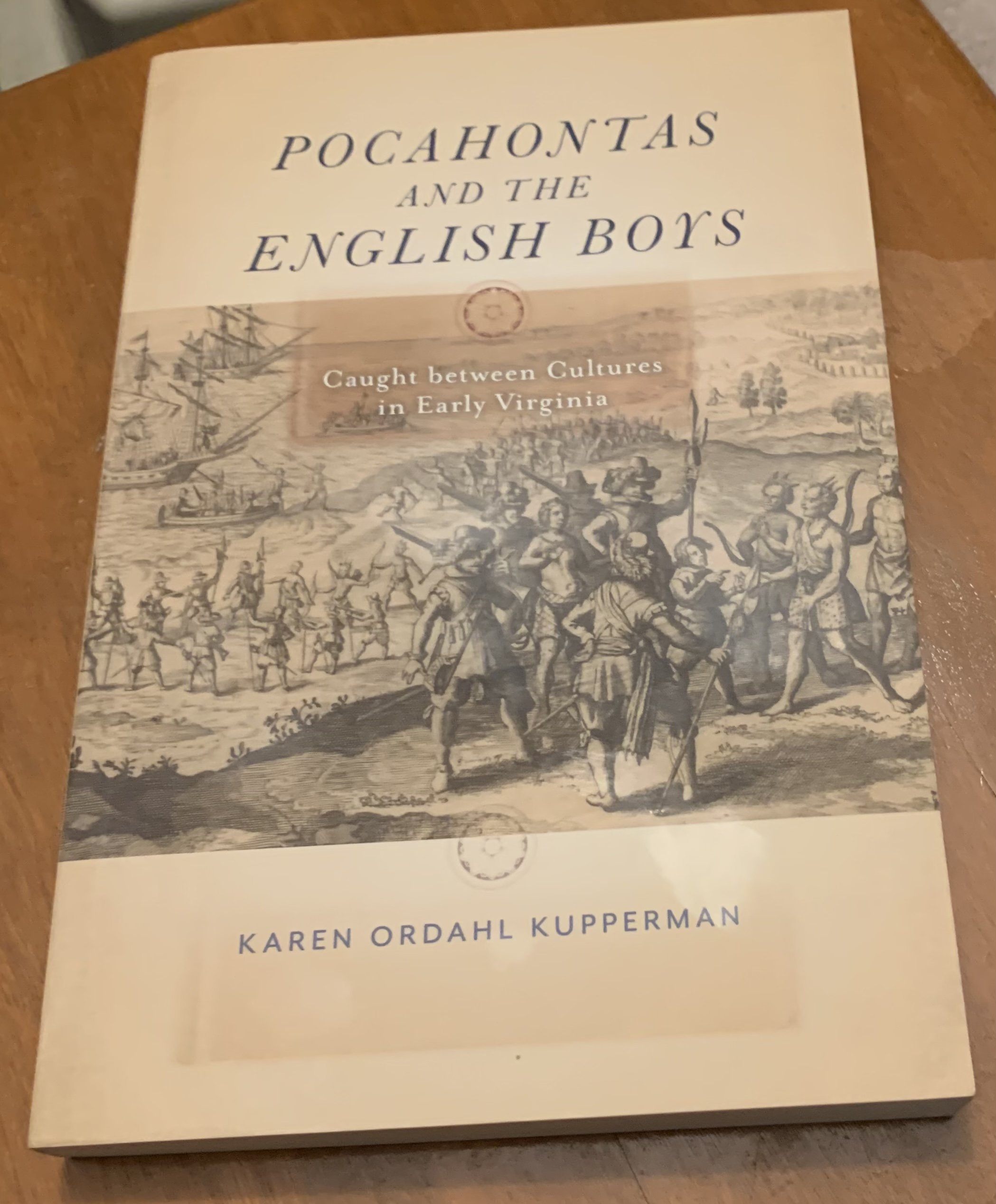
The Best Book I Read This Month: Pocahontas and the English Boys by Karen Ordahl Kupperman

The best book I read this month was Pocahontas and the English Boys by historian Karen Ordahl Kupperman.

In the book, Kupperman tells the story of the Jamestown colony, but it’s not the usual tale of survival against all odds. In fact, John Smith makes only a cameo appearance. That was one of the things I liked about it. I’ve had more than my fill of the “John Smith saves the day” narrative.

Instead, Kupperman focuses her story on those who were caught between the English and Indigenous cultures: Pocahontas and three young English men who were sent to live with local tribes. It was this cross-cultural focus that made this book stand out to me. I liked seeing Jamestown from the perspective of the Indigenous people it both displaced and depended on.

And while some history books can be dense and difficult, I found Kupperman’s style interesting and accessible. This book read as smoothly and as quickly as a novel. I devoured it in a couple of days.

In short, Kupperman’s Pocahontas and the English Boys is engaging brain food.
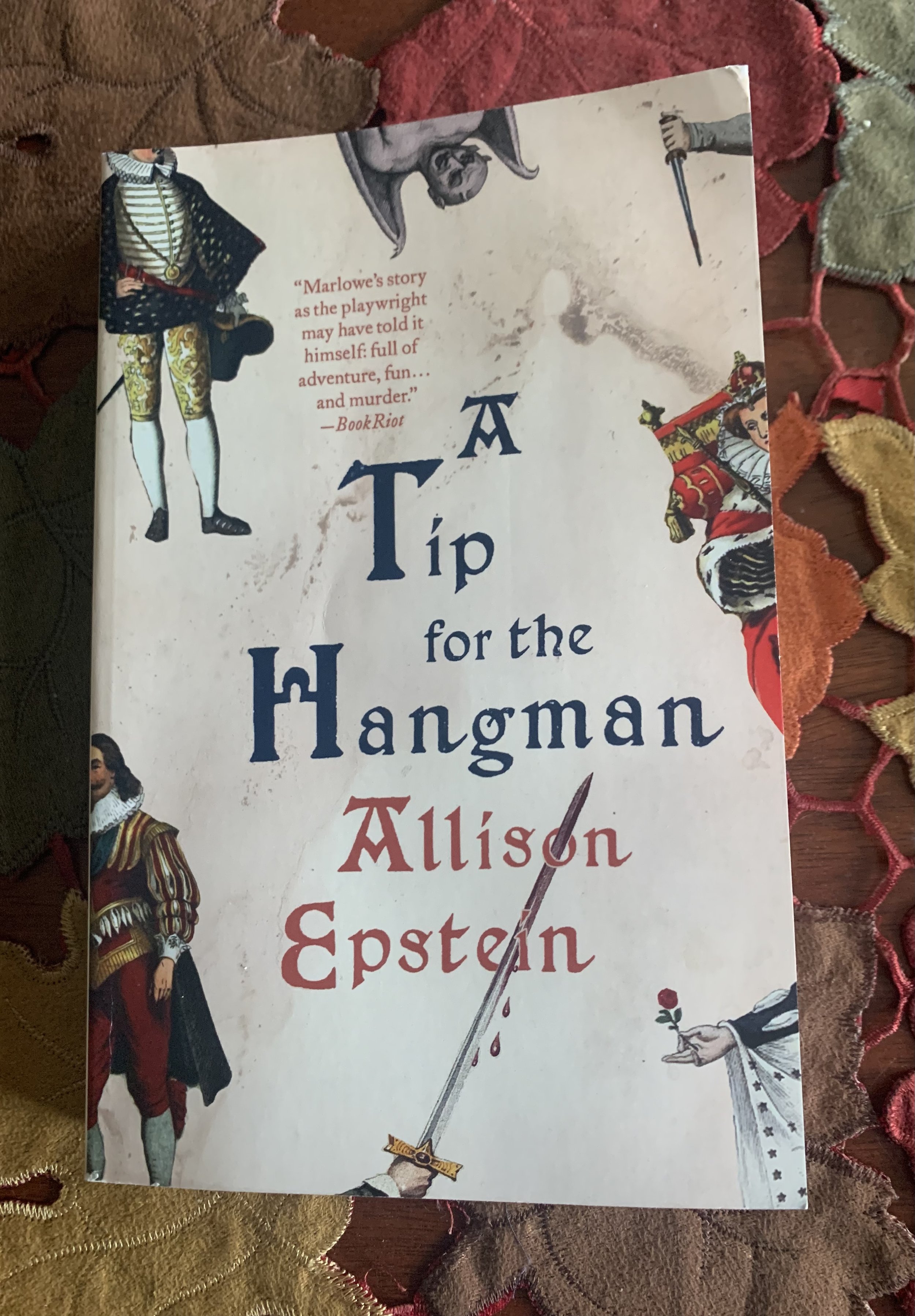
The Best Book I Read This Month: A Tip for the Hangman by Allison Epstein

The best book I read this month was riveting work of historical fiction set in Elizabethan England. Allison Epstein’s A Tip for the Hangman imagines the life of playwright Christopher “Kit” Marlowe.

Marlowe, a contemporary of Shakespeare’s, is one of history’s more colorful figures. Although there is little or no definitive proof, it is commonly believed that he served as a spy for the English crown, and it is around this premise that Epstein weaves her tale.

What I liked most about this book was the vivid, vibrant depiction of Marlowe. He practically leapt off the page. He was witty and charming and daring and vulnerable, all of which made him a great protagonist.

The story itself has plenty of shady characters (as a spy story should) and some nice twists and turns. But it also has heart and romance and adventure.

I especially appreciated the Author’s Note at the end, in which Epstein explains the liberties she took in crafting the story. Every work of historical fiction deviates from historical fact. It’s always nice to know where and how.

Epstein’s next book—Let the Dead Bury the Dead—comes out next year, and I can’t wait to read it.

The Best Book I Read This Month: The Other Wes Moore by Wes Moore

The best book I read this month was written by the newly elected governor of Maryland: Wes Moore. The book came out twelve years ago (in 2010), but I didn’t read it until this month. My boss was so thrilled by Moore’s election victory that she sent every employee a copy. I read it in two days.

In The Other Wes Moore, the author Wes Moore recounts key events in his life and the life of another Wes Moore, one whose life turned out very differently from the author’s. Author Wes Moore learned of the other Wes Moore in an article about a jewelry store robbery, for which the other Moore and his associates were convicted. Moore was sentenced to life in prison. The author Wes Moore wanted to know how two young black men, both born in roughly the same place (the greater Baltimore area) and both raised by single mothers, ended up with such different lives. I don’t think it’s a spoiler to say that he never really found an answer.

Still, there is a satisfaction in Moore’s exploration. His storytelling is engaging and conversational, and he clearly recognizes turning points where his own life might have changed direction. If there is a lesson to be had in the stories of the two Wes Moore’s, I think it’s that there are no easy answers and that it really does take a village to raise a child.

The Best Book I Read This Month: The Inheritance of Orquídea Divina by Zoraida Córdova

The best book I read this month was a delightful, magical story by Zoraida Córdova called The Inheritance of Orquídea Divina. I was bewitched by the book’s prose in the first five pages, and the story held my attention from there.

The book tells two parallel stories that ultimately unite at the end: the story of Orquídea Divina’s life, which she has kept secret from her family, and the story of her grandchildren’s pursuit of information about Orquídea’s past.

Both storylines are imbued with magic, yet the characters remain grounded. These characters were not creatures of fantasy, but very real-seeming people who use and experience magic as an expression of their emotions. In this way, the book felt very reminiscent of the works of Gabriel García Márquez and Isabel Allende.

I wouldn’t call this a happy read—there’s violence and abuse and death—but it is a satisfying one and one I plan to read again someday.

The Best Book I Read This Month: The Decent Inn of Death by Rennie Airth

The best book I read this month was the latest installment in one of my favorite series. The Decent Inn of Death is the sixth entry in Rennie Airth’s John Madden series, which follows Scotland Yard inspector Madden from the aftermath of World War I in Book 1 (River of Darkness) to the mid-twentieth century in this one.

I love this book for the reasons I love this whole series: the police work and the cast of characters. At the center of this story is John Madden’s former boss and current neighbor, Angus Sinclair. Sinclair is long retired but in doing a favor for a new acquaintance, finds himself drawn into a mystery that threatens the life of another new friend. The situation is complicated by a snowstorm that isolates Sinclair not only with the intended victim but the murdered as well. Meanwhile, Madden, two Scotland Yard officers, and a visiting consultant race to find Sinclair and save both him and the woman whose life is in danger.

It’s a solid closed-room (closed-estate, in this case) mystery. If you are fan of English mysteries and you’re not reading this series, you are missing out.